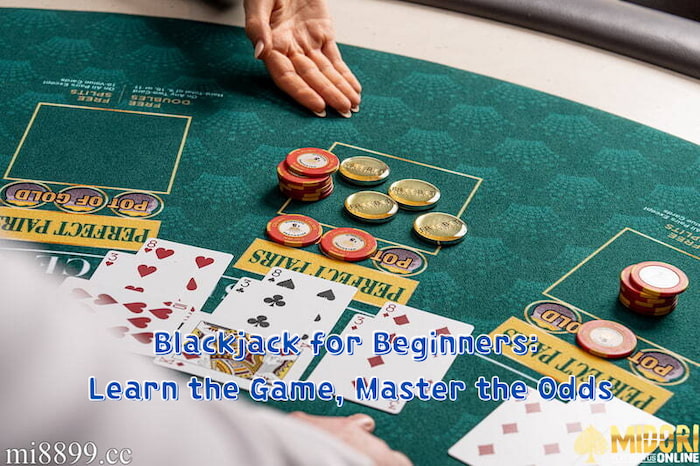
Blackjack, also known as 21, is a game that combines both strategy and luck, with simple rules that make it a popular choice in casinos. The goal of the game is for players to have a hand value as close to 21 as possible, without exceeding it, and to beat the dealer by having a higher hand value. Understanding the rules is essential for making smart decisions during the game, while knowing the odds helps players assess risk and maximize potential winnings. Below, I’ll explain in detail the odds and gameplay process of Blackjack.

Blackjack Rules: How the Game Works
Dealing Phase:Each player and the dealer are dealt two cards. The player’s two cards are face-up, while the dealer has one face-up card and one face-down card (known as the hole card).
Card Value Calculation:
- Number cards (2-10) are worth their face value.
- J (Jack), Q (Queen), K (King) are each worth 10 points.
- A (Ace) can be worth 1 or 11 points, whichever is more beneficial to the player.
Player’s Actions: Players have several options during their turn:
- Hit: Take another card from the deck.
- Stand: Keep the current hand and end the turn.
- Double Down: Double the bet and receive only one more card.
- Split: If the player’s two cards are of the same value (e.g., two 8s), the player can split them into two separate hands, each with an additional bet equal to the original one.
- Insurance: If the dealer’s face-up card is an Ace, the player can choose to place an insurance bet, which costs half of the original bet. If the dealer has Blackjack (Ace and a 10-point card), the player will receive a 2:1 payout for the insurance.

Dealer’s Actions:
- After all players have completed their actions, the dealer reveals their hole card and plays according to fixed rules:
- If the dealer’s hand totals less than 17, the dealer must take additional cards (hit).
- If the dealer’s hand totals 17 or more, the dealer must stand.
Settlement Phase:
- If the player’s hand exceeds 21 points, they bust and lose their bet.
- If the player’s hand is closer to 21 than the dealer’s without busting, the player wins and is paid their bet.
- If the player and dealer have the same hand value, it’s a push, and the player’s bet is returned.

Understanding Blackjack Odds
The odds in Blackjack typically depend on the outcome of the game, including the following situations:
Win Payout (1:1):If the player’s hand is higher than the dealer’s and doesn’t exceed 21, the player wins and is paid even money (1:1). For example, if the player bets 10 units and wins, they receive 10 units in profit, totaling 20 units (original bet + winnings).
Blackjack (Typically 3:2 Payout):If the player’s first two cards are an Ace and a 10-point card (a Blackjack), the player is paid 1.5 times their bet. For example, if the player bets 10 units and gets a Blackjack, they win 15 units in profit, totaling 25 units (original bet + winnings).
Note: Some casinos may offer different payout rates, such as 6:5, which is less favorable for players.

Insurance Payout (2:1 Payout):If the dealer’s face-up card is an Ace, the player may choose to take insurance, costing half of the original bet. If the dealer has a Blackjack, the player will receive 2:1 payout on the insurance bet. For example, if the player bets 10 units and purchases 5 units of insurance, and the dealer has Blackjack, the player wins 10 units. If the dealer does not have Blackjack, the player loses the insurance bet.
Double Down:If the player chooses to double down, the original bet is doubled, and the player can only take one more card. If the player wins, they receive twice the original bet.
Split:If the player splits their hand, each hand requires an additional bet equal to the original one. For example, if the player’s original bet is 10 units, they must bet an additional 10 units for the split hand, and each hand will be settled at 1:1 odds.
Push (Tie):If the player and dealer have the same hand value, it’s a tie or push, and the player’s bet is returned without loss or gain.

Casino Rules
Different casinos may have slightly different rules for Blackjack. Key details to be aware of include:
Dealer’s Rule: Some casinos require the dealer to stand on a “soft 17” (a hand with an Ace valued as 11 and a total of 17, e.g., Ace + 6). Others may allow the dealer to hit on a soft 17.
Doubling Down: Some casinos allow doubling down at any time, while others restrict it to after the first two cards are dealt.
Split Rules: Some casinos may not allow a Blackjack (Ace + 10-point card) to be formed from a split pair, and instead, the hand simply becomes a 20-point hand.
Blackjack is a game that combines both strategy and luck. By making smart bets and decisions, players can maximize their chances of winning. For beginners, understanding the basic rules and odds is essential, but as the game progresses, mastering more complex strategies—such as when to double down or split—can significantly enhance the experience.
Join Midori Online now and explore even more popular games!
Originally shared from: ibb88.cc